
Things to Do in Tirthan Valley: Choose the Right Experiences for Your Trip
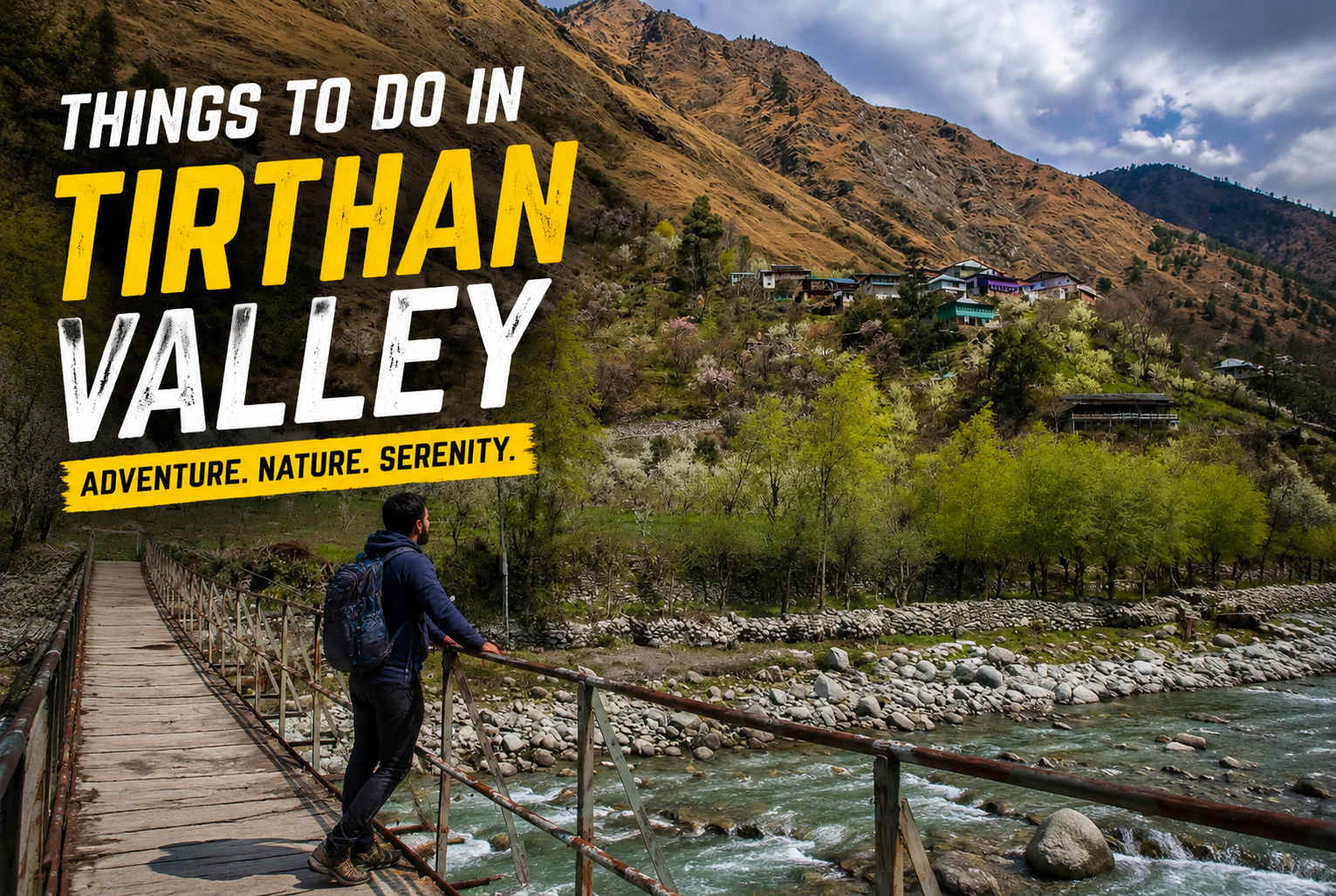
Tirthan Valley rewards travellers who plan by effort and time, not just by list. Here is what you can actually do there, how demanding each activity is, and which experiences to prioritise on a short trip.
Marketing Expert Team
Verified Author
Tirthan Valley lies in the Banjar area of Kullu district, Himachal Pradesh, along the river that gives the valley its name. What makes it activity-rich is its location: it is the western gateway to the Great Himalayan National Park, so forest trails, riverside paths and village routes begin within walking distance of most stays.
Travellers here trek, fish for trout, camp beside the water, watch birds, walk through old wood-and-stone villages and spend unhurried hours doing very little. This guide covers the best things to do in Tirthan Valley, along with the effort, time and season each one realistically needs.
Best Things to Do in Tirthan Valley at a Glance
Use this table to shortlist quickly. Every experience listed here is explained in detail further down the page.
Experience | Best For | Effort | Approx. Time | Best Season |
GHNP ecozone day hike | Nature lovers, first-time hikers | Easy to moderate | 3-6 hours | Apr-Jun, Sep-Nov |
Core-zone trek inside GHNP | Experienced trekkers | Strenuous | 2-10 days | May-Jun, Sep-Oct |
Riverside walks along the Tirthan | Couples, families, slow travellers | Easy | 1-2 hours | Year-round |
Trout angling | Anglers, patient beginners | Easy | 2-4 hours | Angling season only |
Chhoie Waterfall hike | Day hikers, families with older kids | Easy to moderate | 2-3 hours return | Mar-Jun, Sep-Nov |
Riverside camping | Groups of friends, adventure seekers | Easy to moderate | Overnight | Apr-Jun, Sep-Oct |
Village walks and local food | Slow travellers, culture-minded visitors | Easy | 2-3 hours | Year-round, snow permitting |
Birdwatching | Naturalists, patient photographers | Easy | 2-3 hours, early morning | Mar-Jun |
Stargazing | Couples, families | None | 30-60 minutes | Clear nights, Oct-Mar |
Jalori Pass and Serolsar Lake | Day-trippers, hikers | Moderate | Full day | May-Jun, Sep-Nov |
Explore the Great Himalayan National Park
The Great Himalayan National Park is why Tirthan feels wilder than most accessible Himachal valleys. It is a UNESCO World Heritage site, and Gushaini is the usual Tirthan-side roadhead into it.
Treat GHNP as two places. The ecozone is the buffer belt of villages, forest paths and riverside trails around Gushaini: open, no permit, and where most visitors actually spend their time. The core zone begins hours on foot from the road and is permit-controlled, with registered guides required for multi-day trekking. Confusing the two is the commonest planning mistake here. Great Himalayan National Park activities are done entirely on foot.
Best for: Nature lovers, trekkers, birdwatchers
Time needed: Half a day in the ecozone; 2-10 days in the core
Effort level: Easy in the ecozone, strenuous in the core
Best season: April to June, September to November
Family-friendly: Ecozone walks yes; core-zone treks no
Go Trekking in Tirthan Valley
Treks in Tirthan Valley fall into three levels, and matching the level to your fitness matters more than picking a trail by name. Village hikes of one to two hours link hamlets along the slopes. Full-day forest hikes, such as the walk from Gushaini towards the park gate and back, run four to six hours and are the best treks in Tirthan Valley for beginners. Multi-day treks into the park interior are a separate category, with sustained climbs and camping.
Wear shoes with proper grip, because trails stay damp under tree cover long after rain. Start early, as cloud builds through the afternoon. Beyond marked day trails, walk with a local guide: paths braid off into cattle tracks.
Best for: Adventure seekers, fit walkers, first-timers
Time needed: 1-2 hours to several days, by level
Effort level: Easy to strenuous
Best season: April to June, September to November
Family-friendly: Short hikes yes; long treks no
Spend Time Along the Tirthan River
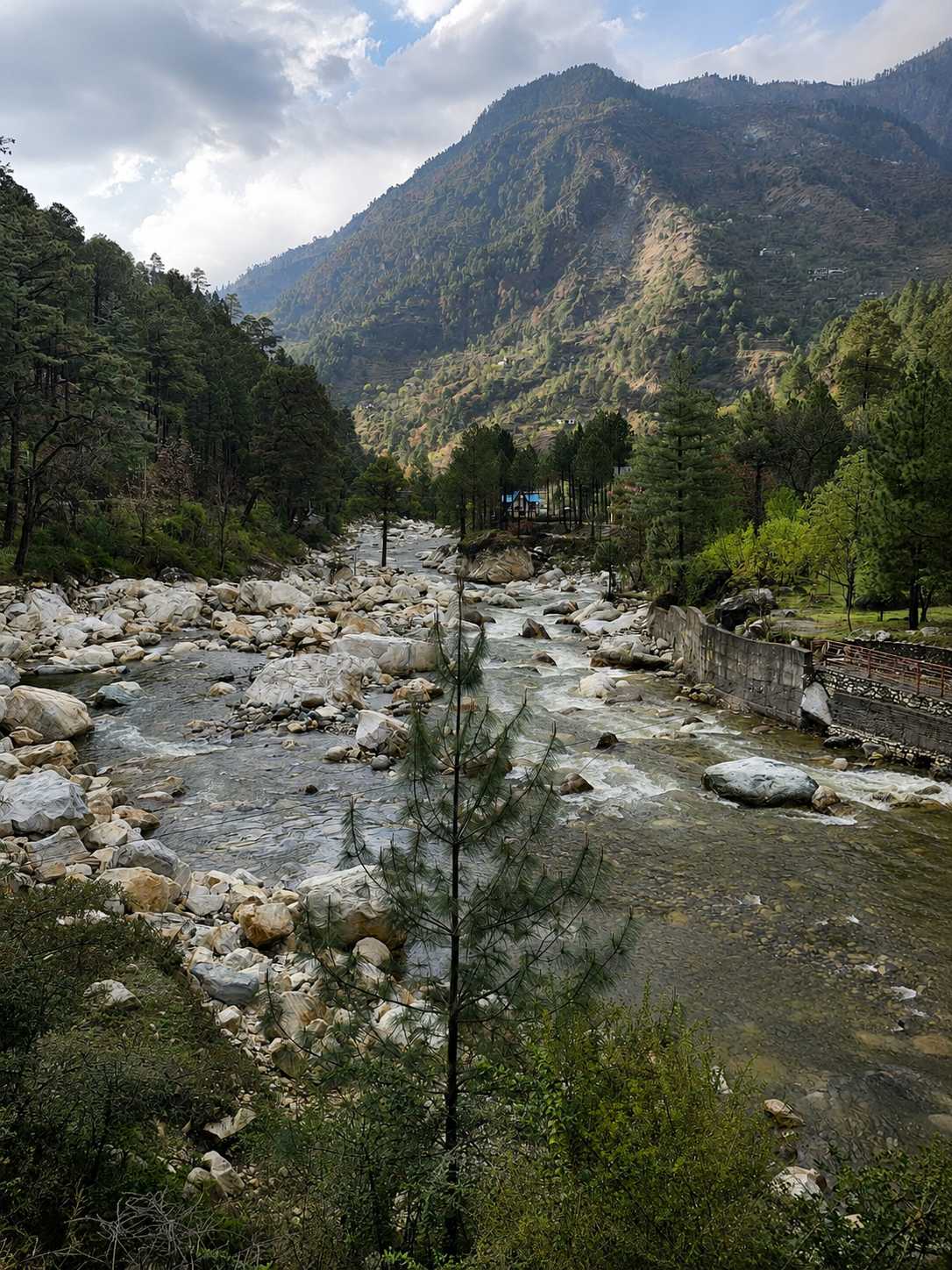
The Tirthan River is the valley's centre of gravity, and time beside it counts as an activity rather than a view you photograph once. Riverside paths between Nagini and Gushaini are walkable in ordinary shoes. The rewarding version is unhurried: a slow walk upstream, an hour with a book on a warm boulder, photography before nine and after four. Carry your wrapping back out.
The Tirthan runs cold and fast, strengthens with snowmelt between April and June, and rises sharply in monsoon rain. Stay on the banks, avoid slick rocks, and keep children within arm's reach.
Best for: Couples, families, slow travellers
Time needed: 1-2 hours, or an unhurried morning
Effort level: Easy
Best season: Year-round; avoid the bank in monsoon
Family-friendly: Yes, with close supervision
Try Trout Fishing in the Tirthan River
Trout fishing in Tirthan Valley is the activity most closely associated with the region. The Tirthan is classified as a trout stream by the Himachal Pradesh Fisheries Department and holds brown and rainbow trout. Angling is licensed and seasonal: a permit is required, trout waters are restricted to rod and line, and a closed period protects spawning fish. Most stays arrange permits for guests.
Beginners do fine, since the technique is learnable in a morning with an instructor. Catch and release is the responsible default: wet hands, fish kept in the water, and all line, hooks and packaging carried out.
Best for: Anglers and patient beginners
Time needed: 2-4 hours, morning or late afternoon
Effort level: Easy; wading needs steady footing
Best season: Official angling season only
Family-friendly: Older children, supervised
Hike to Chhoie Waterfall
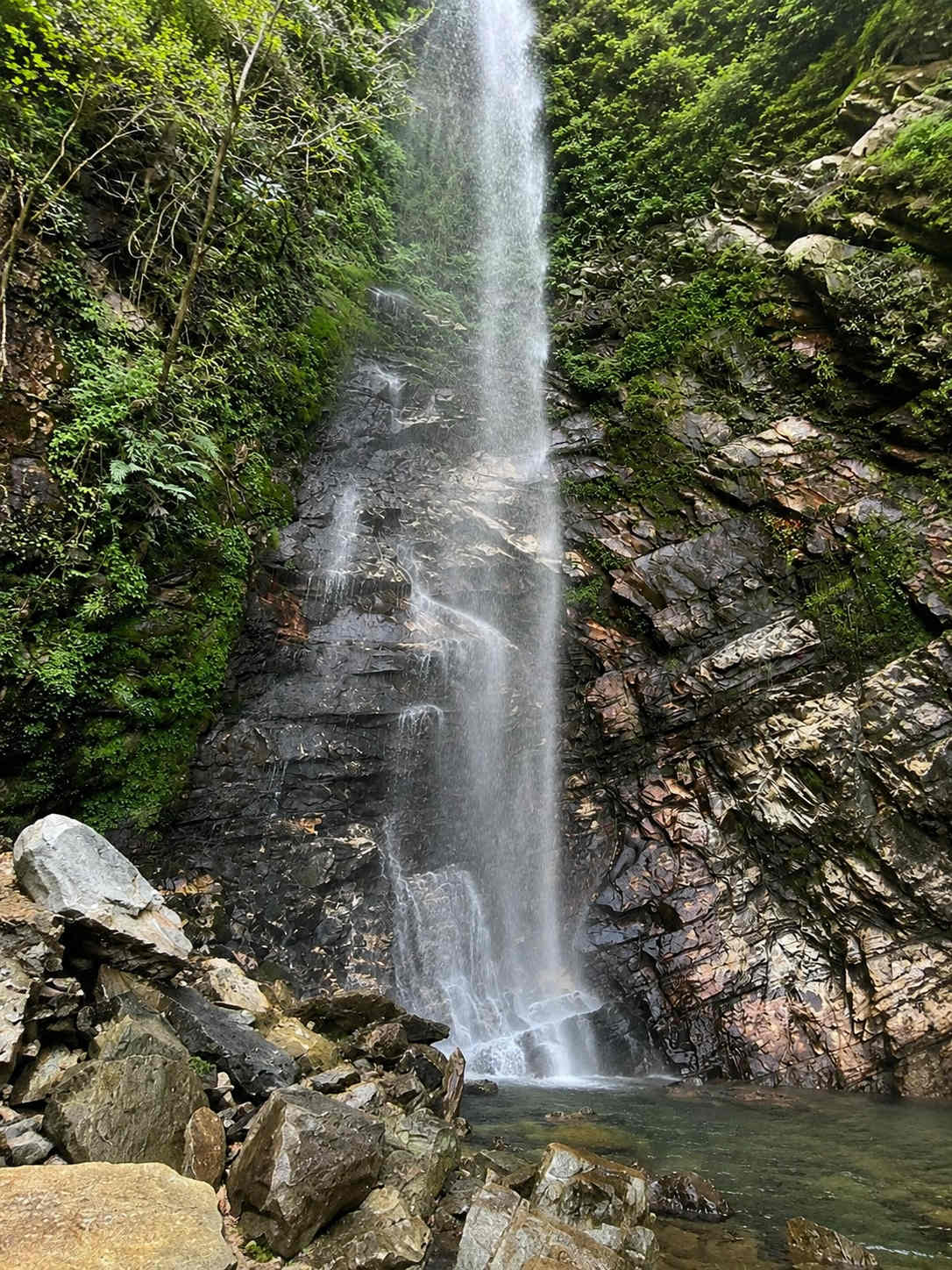
The walk to Chhoie Waterfall is the valley's most popular short hike and a good way to test your legs before a longer day. The trail starts near Nagini village and climbs for forty-five minutes to an hour, opening with cut stone steps through a village and then turning into a rough forest path with steep, uneven sections. Rocks near the falls stay wet and slippery year-round.
The waterfall is named after Chhoi Mata, a local deity, and villagers still make offerings at a tree along the trail. Keep noise down, leave the offerings alone, and carry your waste back out.
Best for: Day hikers, families with older children
Time needed: 2-3 hours return
Effort level: Easy to moderate, some steep stretches
Best season: March to June, September to November
Family-friendly: Older children yes; hard for toddlers
Go Camping in Tirthan Valley
Camping in Tirthan Valley usually means one of two things. Organised riverside camps near Gushaini and Nagini provide tents, bedding and meals, and suit families and first-timers. Trek-supported camping in the park interior is run by licensed operators with guides, and is the only legal way to sleep in the core zone.
Nights are cold even in summer, because the valley sits high and the river cools the air after dark. Skip Tirthan Valley camping during heavy monsoon weeks, when banks are unstable and water levels change overnight. Pitch only where camping is permitted, keep tents well back from the water, and carry everything out.
Best for: Groups of friends, adventure seekers
Time needed: One or two nights
Effort level: Easy at riverside camps, strenuous on treks
Best season: April to June, September to October
Family-friendly: Yes at organised riverside camps
Experience Village Life and Slow Travel
Walking between the valley's settlements is one of the better outdoor activities in Tirthan Valley, and it costs nothing. Hamlets such as Sharchi and Bathad sit higher on the slopes above Gushaini and Nagini. Older houses use kath-kuni construction, alternating timber and stone without mortar. Food is the other draw: siddu, rajma in desi ghee, local trout and, on festival days, a full dham.
These are working villages, not attractions. Ask before photographing people or homes, keep to public paths, and note that some temples and deity sites restrict entry.
Best for: Slow travellers, families, culture-minded visitors
Time needed: 2-3 hours, or a relaxed half day
Effort level: Easy, with some uphill
Best season: Year-round; higher hamlets snowbound in winter
Family-friendly: Yes
Go Birdwatching and Nature Spotting
The forest belt around Tirthan is strong birding country precisely because it borders a protected park, with oak, deodar and riverine habitat within a short walk of the road. Go out in the first two hours after sunrise, walk slowly and stay on the path. A local naturalist will find far more than you will alone.
The Western Tragopan is the region's flagship species and the reason serious birders come, but it is endangered and rarely seen. Treat a sighting as luck, never play calls to draw birds in, and keep well away from nests.
Best for: Nature lovers, patient photographers
Time needed: 2-3 hours, best at dawn
Effort level: Easy
Best season: March to June
Family-friendly: Better for older children
Stargaze on Clear Mountain Nights
Tirthan has very little artificial light after dark, so on a clear night the sky is worth sitting out for. This is the easiest nature activity in Tirthan Valley: no walking, no booking, no equipment. Cloud cover decides it, not the season, and the clearest skies follow the monsoon, from October through winter. Those are also the coldest nights, so carry a warm jacket and keep torches off.
Best for: Couples, families, campers
Time needed: 30-60 minutes
Effort level: None
Best season: Clear nights, October to March
Family-friendly: Yes, with warm clothing
Head Up to Jalori Pass and Serolsar Lake
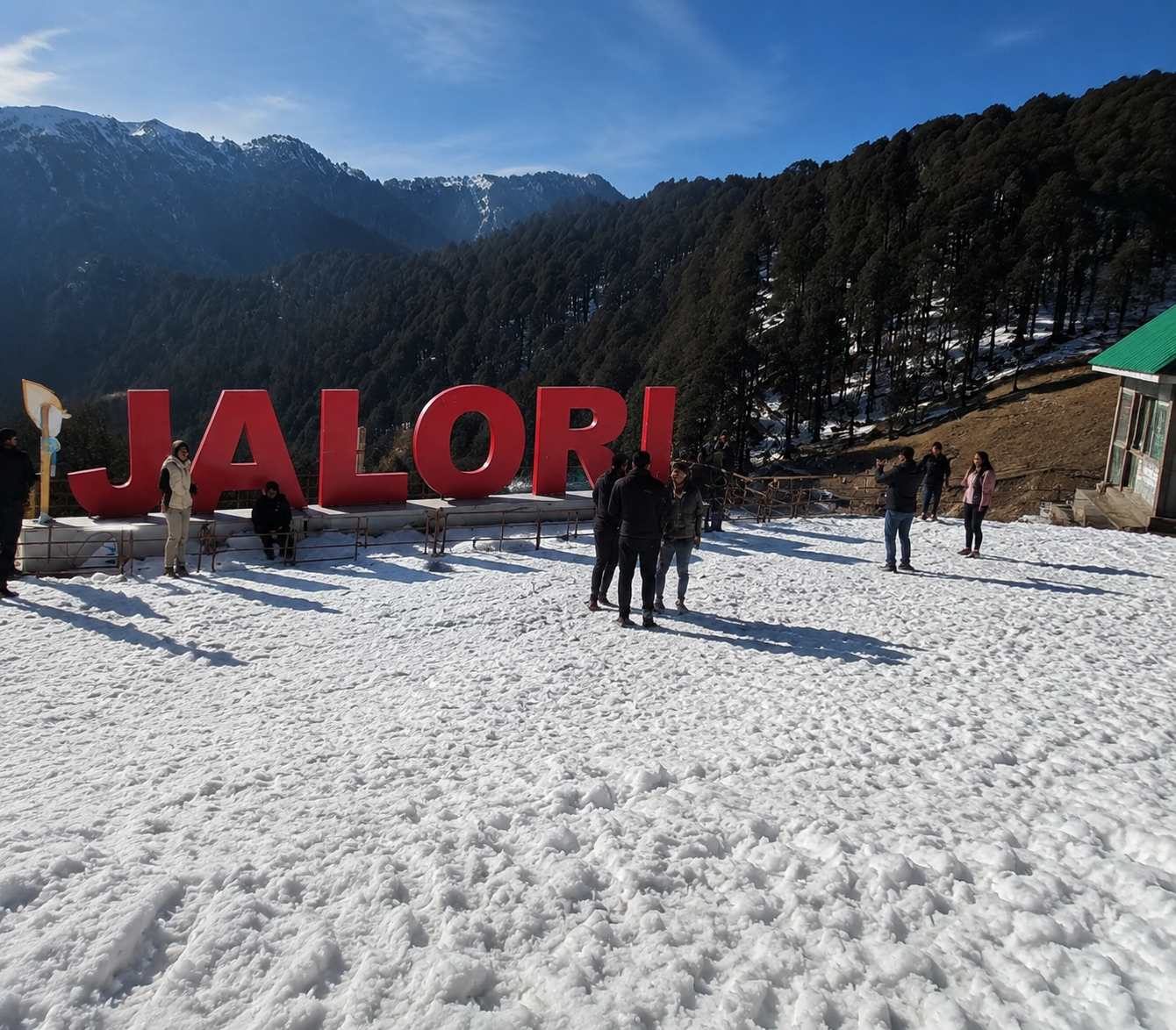
Jalori Pass sits at roughly 3,100 metres on the ridge above the valley, about ninety minutes by road from Gushaini, and a stay on the Jibhi side of the ridge is a common way to split the trip. From the pass, the trail east to Serolsar Lake runs about five kilometres one way, roughly two hours each way, and is easy to moderate. The shorter climb west to the Raghupur Fort ruins is steeper but quicker.
Access is seasonal. The pass road commonly closes during heavy snowfall between December and February. Check road status locally the day before rather than trusting a forecast.
Best for: Day-trippers and hikers with a spare day
Time needed: A full day from Tirthan Valley
Effort level: None at the pass; moderate to the lake
Best season: May to June, September to November
Family-friendly: The pass yes; the lake walk only for strong walkers
Things to Do in Tirthan Valley for Different Travellers
Different groups get very different value out of the same valley. Here is how to weight your days.
For Couples
Slow mornings by the river, the Chhoie Waterfall hike, a village walk and stargazing after dinner make a well-paced couple's trip. Keep one day unplanned, and if you want quiet over convenience, choose a riverside stay in Tirthan Valley rather than a roadside property.
For Families
Families do best with riverside time, a village walk, an easy forest trail and one longer outing such as the Jalori Pass drive. Build in buffer time, because mountain roads are slow and short distances take longer than expected. Families splitting the trip across the ridge often pair a Tirthan base with a family-friendly stay near Jibhi.
With Kids
Younger children manage riverside walks, short forest paths and camp evenings well. The Chhoie hike suits children roughly eight and above who are used to uneven ground. Keep river time supervised, choose grippy shoes over sandals, and avoid back-to-back activity days.
For Adventure Seekers
Multi-day trekking in the GHNP core zone is the main draw, arranged through licensed operators with registered guides. Trek-supported camping, long day hikes and angling on remote upstream stretches fill out a serious itinerary. Plan four days or more.
For Slow Travellers
Village walks, unhurried riverbank hours, dawn birding, local food and photography are the core of a slow trip, and one activity a day is plenty. This group benefits most from four nights rather than two, because the valley reveals itself gradually.
Offbeat Things to Do in Tirthan Valley
These are not secret places, because the valley does not really have any. They are ordinary experiences most visitors skip because they are too busy covering ground.
· Walk the river before breakfast, when the bank is empty, birds are active and the light is at its best.
· Eat a meal cooked in a village home. Several homestays arrange this on request.
· Walk between two hamlets instead of driving, which turns a transfer into the best hour of the day.
· Visit during orchard season, when apple and apricot harvesting is in full swing across the slopes.
· Spend a morning birding with a local naturalist rather than trekking, covering two kilometres instead of ten and seeing more.
· Look properly at the old kath-kuni houses. Once you understand what the alternating timber and stone courses do structurally, village walks change. The same style appears in the medieval towers among the things to experience around Jibhi.
How Many Days Are Enough for Tirthan Valley Activities?
Two nights is the practical minimum and covers the essentials: riverside time, one short hike such as Chhoie Waterfall, and a village walk. It works as a weekend trip from Delhi NCR or Chandigarh, though travel time in and out will dominate.
Three nights is the sweet spot. The extra day absorbs the Jalori Pass and Serolsar Lake outing, or a full day of angling, without rushing anything else.
Four nights or more suits trekking-focused travellers, since core-zone treks inside the Great Himalayan National Park run from two to ten days on their own. Slow travellers benefit from the same length for the opposite reason.
On a short stay, prioritise river time, one hike and one village experience. Drop the Jalori day trip before anything else, because it consumes a whole day.
Conclusion: Planning Your Days in the Valley
Tirthan Valley works best when you choose two or three experiences and give them room. The forest and river activities are the heart of it, trekking scales from an hour to ten days depending on what you want, and the village walks and local food give the trip its character. Everything else follows from where you base yourself.
Staying close to the water shortens the walk to nearly every activity on this list. Echor's riverside cottages in Tirthan Valley sit beside the Tirthan River with the forest trails, village paths and the park approach all within easy reach, which makes a two or three-night trip go much further.
Frequently Asked Questions
Get in Touch
Still have questions? Fill out the form below and our team will get back to you shortly.