
Himachal in Winter: Where to See Snow, When, and Where to Stay
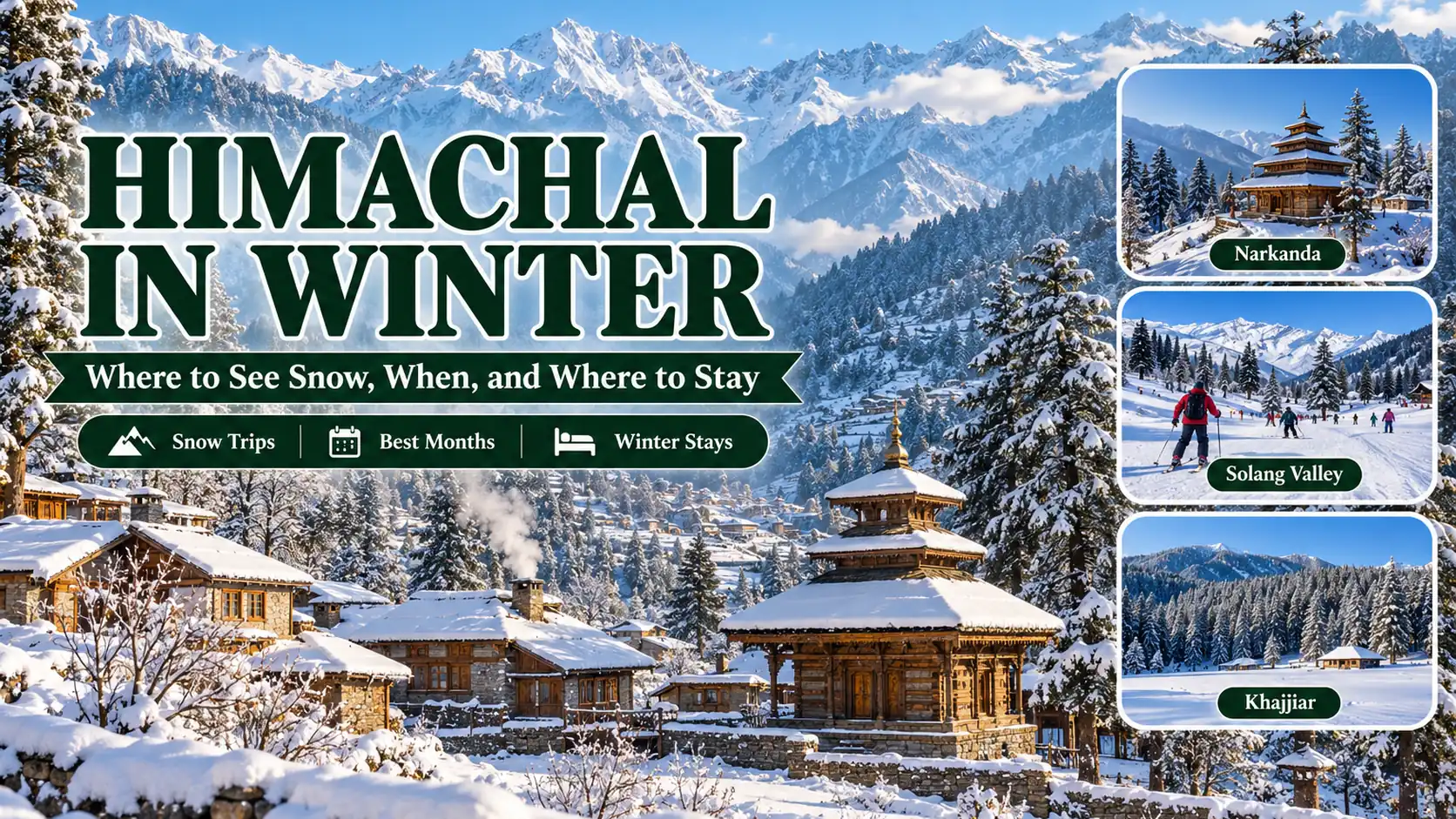
Plan Himachal in winter: when snow usually falls, six snow places grouped by access, which passes close, safe snow driving, packing and where to stay.
Echor Editorial Team
Verified Author
A snow trip to Himachal in winter starts with one honest fact. Snow does not fall to a timetable. A town at 2,500 metres can be white in mid December one year and dry until late January the next. The high valleys get snow first and keep it longest, but many of their roads close. The lower hill towns are easy to reach, yet their snow comes and goes. Picking the right place is a trade between how much snow you want and how far you are willing to drive on icy roads. This guide covers the usual snow months and six places grouped by how easy they are to reach. It also explains what shuts for the season and how to drive and pack. A comparison table at the end helps you choose where to spend Himachal in winter.
Key Takeaways
- Usual snow window: Most snowfall in Himachal lands between late December and February, with January often the most reliable month.
- Altitude decides a lot: Places above about 2,500 metres see snow sooner and hold it longer.
- Easiest from Shimla: Kufri and Narkanda sit on the same highway and are reachable in most winter weeks.
- Manali side: Solang Valley and the Atal Tunnel route to Sissu give deep snow, but police often stop traffic after heavy falls.
- Seasonal closures: Rohtang, Kunzum and Jalori passes usually shut to vehicles for the core winter months.
- No guarantees: Keep one spare day and check road status locally on the morning you drive.
When Snow Falls in Himachal in Winter
The usual months
For the middle hills around Shimla, Kufri and Narkanda, the first proper snow often arrives in the second half of December. January usually brings the most regular spells, and February keeps the cover going in shaded spots. Late falls in March are possible but melt quickly.
Higher valleys come first
Kinnaur, Lahaul and the upper Kullu valley often see their first snow in November or early December. They keep it well into spring.
Best time for snow in Himachal
If you can only plan one trip, aim for the first three weeks of January. That gives you the best odds in most places without the worst of the February road closures. Even then, a dry week can happen, so book places you would enjoy without snow.
Places to Visit in Himachal in Winter, Grouped by Access
These himachal snow destinations fall into four groups. The first two are the easiest for a short break. The last two need more time and more care on the road.
Easy from Shimla: Kufri and Narkanda
Kufri sits roughly 15 to 20 km beyond Shimla at about 2,500 metres, so it is the quickest snow fix from the state capital. It gets crowded on weekends after a fresh fall. Narkanda is further along the same highway, roughly 60 to 65 km from Shimla at about 2,700 metres. It is quieter, with Hatu Peak above it and wide views of the ranges.
For a base on this road, Echor Backwoods Villa in Narkanda is a six room villa at Ghareawat, off Vanvaas Road. Every room faces the mountains. The property page mentions a rooftop terrace, a restaurant, room service and family rooms, and it is pet friendly. A room that looks at the snow matters a lot here, because you may spend a whole afternoon indoors while the road is cleared.
The Manali side: Solang Valley, Atal Tunnel and Sissu
Solang Valley lies about 13 to 15 km from Manali. It is the main snow play area on this side, and its slopes are used for skiing in good years. Beyond it, the Atal Tunnel takes the road under the Pir Panjal range into Lahaul, near Sissu at around 3,100 metres. Sissu often has deep snow when Manali has very little.
The catch is access. After heavy snow, the police or district administration can close the road towards the tunnel for a day or several. Sometimes vehicles are stopped near Solang, and taxis or chains may be required. Check the Kullu and Lahaul police updates before you set out.
For a Manali base, Echor Himalayan Heights Resort and Spa in Manali sits on Hamta Road at Prini. Its page lists a swimming pool, an open air jacuzzi, a kids' play area, indoor games and a lift. Book a mountain view room if snow on the slopes is the point of the trip.
Dalhousie and Khajjiar
Dalhousie, at about 2,000 metres, gets snow in some winters, usually in January or February. Khajjiar, a meadow ringed by deodar trees about 20 to 25 km away, can turn completely white after a good fall. Snow here is less reliable than near Narkanda, but the area is calm and less crowded. The connecting road can be closed for short spells after snow.
Kalpa in Kinnaur
Kalpa sits around 2,900 to 3,000 metres above Reckong Peo and faces the Kinner Kailash range. Winters here are cold and often snowy from December to February. Reaching it means a long day on the Kinnaur stretch of the highway from Shimla, roughly 220 to 250 km. Landslides and snow can block it. Go only with flexible dates and an experienced local driver.
Jibhi and Jalori, when open
Jibhi, in the Tirthan side of Kullu, sits lower at about 1,900 to 2,000 metres. It gets light snow in some years and stays pretty in the cold even without it. Jalori Pass above it, at roughly 3,100 metres, usually takes heavy snow and is often closed to vehicles from about December to March. Treat Jibhi as a quiet cabin stay with a chance of snow, not a sure one.
What Closes in Himachal in Winter
Rohtang Pass
Rohtang, at close to 4,000 metres, usually closes to regular traffic from around November until late spring. When it is open, vehicles need an online permit, and daily numbers are capped. In winter, the Atal Tunnel route replaces it for travel into Lahaul.
Kunzum Pass and the Spiti routes
Kunzum Pass, between Lahaul and Spiti, normally stays shut from late autumn until around June. In winter, Spiti is usually reached only from the Kinnaur side via Reckong Peo, and that road also faces snow and landslide closures.
Jalori Pass
As noted above, the Jalori road is often blocked after the first big falls and may stay shut for weeks. Ask in Jibhi before you plan a drive across.
Exact dates change each year. Confirm with the local police, the district administration or your hotel before you lock anything in.
Driving in Snow in Himachal
Before you leave
Get your vehicle checked and pack a set of snow chains. Try fitting them once at home, before you need them on a cold roadside. A full tank matters because fuel stops can be far apart in the high valleys.
On the road
- Drive in daylight and plan to arrive by mid afternoon.
- Slow right down where the road stays in shadow, because ice lingers there longest.
- Use low gears on descents and avoid hard braking.
- Follow police instructions at checkpoints, even if the road ahead looks clear.
When to hire a driver
If you have never driven on snow, hire a local taxi for the last stretch. Local drivers know which corners freeze and when the road is likely to open. For a fuller look at the Shimla road, our guide to Narkanda in winter covers Hatu Peak and the drive in detail.
Packing for Snow
Clothing
Dressing for Himachal in winter is about layers. Pack thermal inner layers, a fleece, and a windproof padded jacket. Add a woollen cap, waterproof gloves and wool socks for each day. Night temperatures in the higher towns often fall below freezing.
Footwear and extras
Waterproof boots with deep grip are worth more than any other single item. Carry sunglasses, sunscreen, lip balm, a power bank, basic medicines and a small torch. Keep snacks and water in the car in case of a long wait at a closure.
Himachal Snow Destinations Compared
| Place | Rough altitude | Usual snow months | Winter access | Best for |
|---|---|---|---|---|
| Kufri | About 2,500 m | Late Dec to Feb | Easy from Shimla | Short trips, first snow |
| Narkanda | About 2,700 m | Late Dec to Feb | Usually open on the highway | Quiet snow views, Hatu Peak |
| Solang Valley | About 2,500 m | Dec to Feb | Can be stopped after heavy falls | Snow play, families |
| Sissu (Atal Tunnel) | About 3,100 m | Dec to Mar | Often closed after snowfall | Deep snow, day trips |
| Dalhousie and Khajjiar | About 1,900 to 2,000 m | Jan to Feb, not every year | Mostly open | Calm, forest views |
| Kalpa | About 2,900 m | Dec to Feb | Long drive, closure prone | Big peaks, slow travel |
| Jibhi | About 1,900 m | Light, some years | Open; Jalori often shut | Cabins, quiet stays |
Altitudes and months are rounded and vary by source and by year. Use the table as a starting point for Himachal in winter, then check local conditions.
Quick Checklist
- Choose between easy access and deeper snow before you book.
- Aim for early to mid January if your dates are flexible.
- Keep one spare day in the plan.
- Check police and district road updates on the morning you drive.
- Carry chains and arrive before dark.
- Pack layers, waterproof boots and gloves.
Frequently Asked Questions
Get in Touch
Still have questions? Fill out the form below and our team will get back to you shortly.