
Jibhi in Winter 2026: Snowfall, Jalori Pass Status & Cozy Treehouse Stays
Plan your winter trip to Jibhi with our 2026 guide. Discover snowfall timings, Jalori Pass road conditions, frozen waterfalls, and cozy heated treehouse stays.
Verified Author
Quick Winter Guide Summary
Snowfall Timing: Jibhi valley receives light snow dustings by mid-December, with heavy snow settling across Tandi and higher ridges between late December and mid-February. Road Access: The Aut-Banjar-Jibhi highway remains open all winter, but Jalori Pass frequently closes after heavy snowfall. Top Stay Recommendation: For authentic wooden charm, heated jacuzzi comforts, and valley snow views, stay at Echor Jibhi Treehouse Retreat in Tandi.
If you're seeking a winter mountain retreat that trades bumper-to-bumper mall road traffic for whispering pine forests, frosty wooden bridges, and crackling riverside bonfires, Jibhi is Himachal Pradesh's best-kept winter sanctuary. Tucked away in the serene Tirthan-Banjar valley, Jibhi in winter transforms into a peaceful haven blanketed in crisp mountain frost and alpine snow.
Whether you're planning a romantic holiday watching the snowfall from a heated treehouse balcony, taking brisk walks to frozen forest waterfalls, or testing your altitude mettle toward the snowfields of Jalori Pass, this comprehensive 2026 guide covers everything you need to know before packing your thermals.
Jibhi Winter Weather & Snowfall Probability (Month-by-Month)
Understanding Jibhi's microclimate is essential for planning. The main Jibhi market sits at approximately 1,600 meters (5,250 feet), while the surrounding ridge hamlets like Tandi and Shojha perch between 2,100 and 2,700 meters. This altitude difference means that while Jibhi village might experience crisp winter sunshine, the upper hamlets are often blanketed in thick snow.
| Month | Day Temp | Night Temp | Snow Odds | Overall Travel Vibe |
|---|---|---|---|---|
| November | 12°C to 17°C | 2°C to 6°C | Low (Jalori gets frost) | Crisp golden autumn-to-winter shift; crystal clear Himalayan panoramas. |
| December | 6°C to 12°C | -2°C to 3°C | Moderate (High in Tandi & Jalori) | Magical pre-Christmas freeze; evening bonfires and cozy cabin mornings. |
| January | 2°C to 8°C | -6°C to -1°C | Very High (Peak winter) | Deep white wonderland; thick snow on wooden roofs and deodar branches. |
| February | 5°C to 11°C | -3°C to 2°C | High (Gradual thaw late month) | Crisp powder snow on high ridges; warm sunny afternoons for village walks. |
Jalori Pass & Serolsar Lake in Winter: The Reality Check
Rising to 3,120 meters (10,280 feet), Jalori Pass is the crown jewel of the Banjar valley and marks the high-altitude pass connecting Kullu to the Shimla-Rampur district. In winter, Jalori Pass transforms into an expansive white snow desert, but visiting requires careful planning:
 Panoramic winter vistas overlooking the pine-covered Tandi ridge, situated at 2,200 meters along the route to Jalori Pass.
- Road Accessibility: The 12-kilometer ascent from Jibhi to Jalori Pass winds through steep hairpin turns past Shojha. Between late December and mid-February, heavy snowfall and black ice frequently make the final 5 km impassable for standard two-wheel-drive sedans and hatchbacks.
- Local 4x4 Taxis: If you're eager to reach the snowline, do not risk driving a personal front-wheel-drive car on morning black ice. Local experienced drivers with 4x4 Gypsy cabs or tire chains operate from Jibhi and Shojha.
- Serolsar Lake Trek: Under clear weather, the gentle 5 km trail from Jalori Pass through dense oak forests to the sacred Serolsar Lake (dedicated to Goddess Buddhi Nagin) is a winter trekking classic. In deep January snow, the trail is knee-deep and should only be attempted in sturdy waterproof trekking boots with an experienced local guide.
Top 6 Things to Do in Jibhi During Winter
1. Wake Up in a High-Altitude Wooden Treehouse
The hallmark Jibhi experience is living among the forest canopy. At higher altitudes like Tandi village (just 8 km above the valley floor), staying in a traditional handcrafted cedarwood cottage or treehouse lets you watch snow dust the evergreen pine needles directly outside your window. The aroma of natural deodar timber combined with heated duvets and private jacuzzi tubs makes winter mornings an absolute luxury.
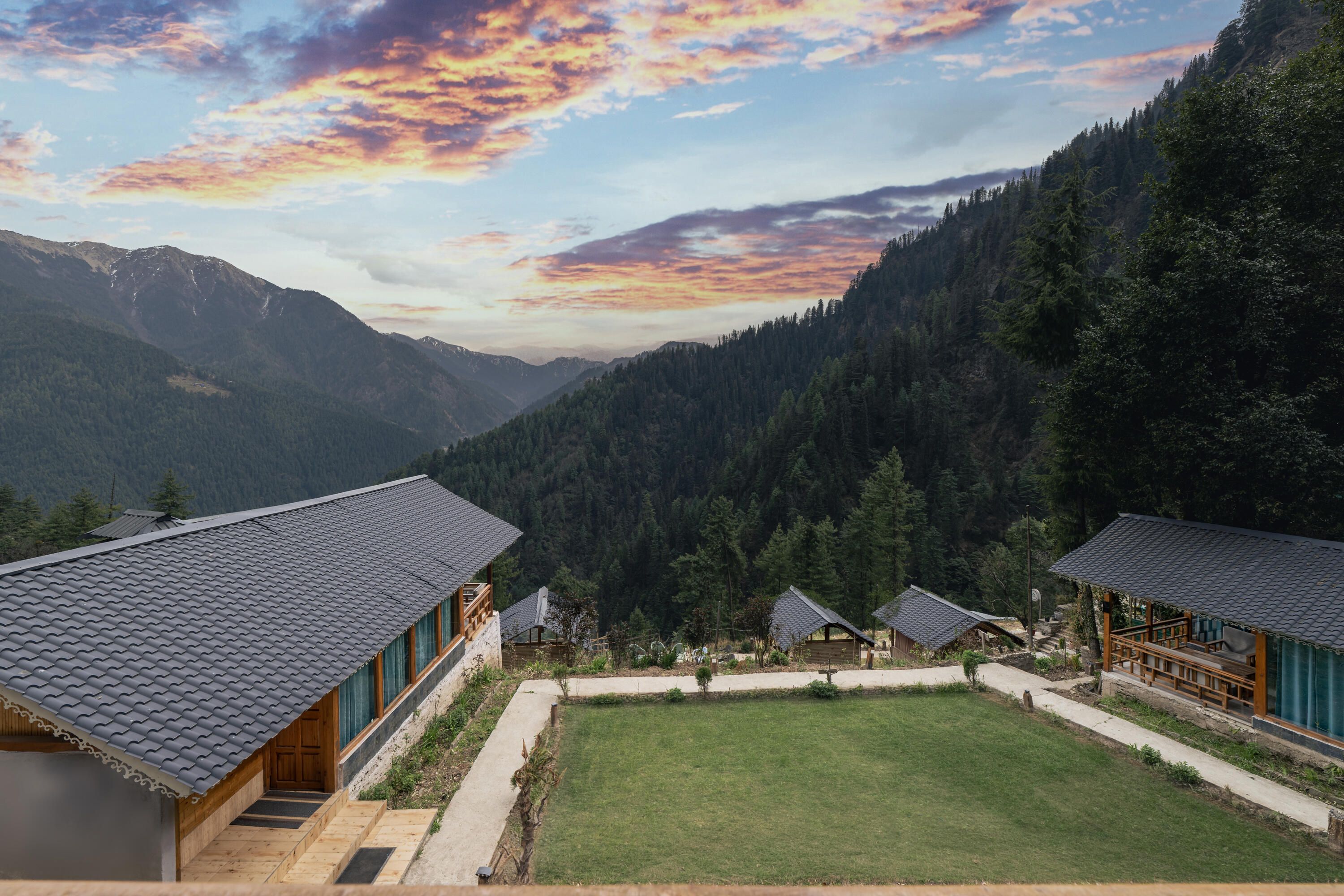 Handcrafted wooden treehouse chalets at Echor Jibhi Retreat in Tandi, offering authentic mountain living amidst towering deodar pine trees.
2. Walk Through the Frosty Pine Trail to Jibhi Waterfall
Located a short 10-minute stroll from the main road, the trail to Jibhi Waterfall winds over wooden bridges crossing gushing mountain streams. In the morning chill of December and January, icicles hang delicately from rock overhangs and moisture creates crystalline frost on the timber planks. It's an easy, romantic walk suitable for families and couples alike.
3. Explore Mini Thailand (Kulhi Katandi) in Winter Silence
Hidden off the Banjar road, this natural rock formation frames an emerald mountain stream flowing between two towering mossy stone walls. In peak summer, this spot draws picnic crowds; during winter, you'll often have the entire canyon to yourself. The stillness, crisp air, and crystal-clear turquoise waters make for stunning winter photography.
4. Discover the Ancient Stone & Wood Architecture of Chehni Kothi
Standing over 1,500 years old, Chehni Kothi is an architectural marvel—a multi-story fortified tower built entirely using the indigenous Kath-Kuni style (interlocking stone and cedar timber without cement or iron nails). The moderate uphill walk from Bihar village passes through terraced apple orchards that look cinematic under winter sunlight.
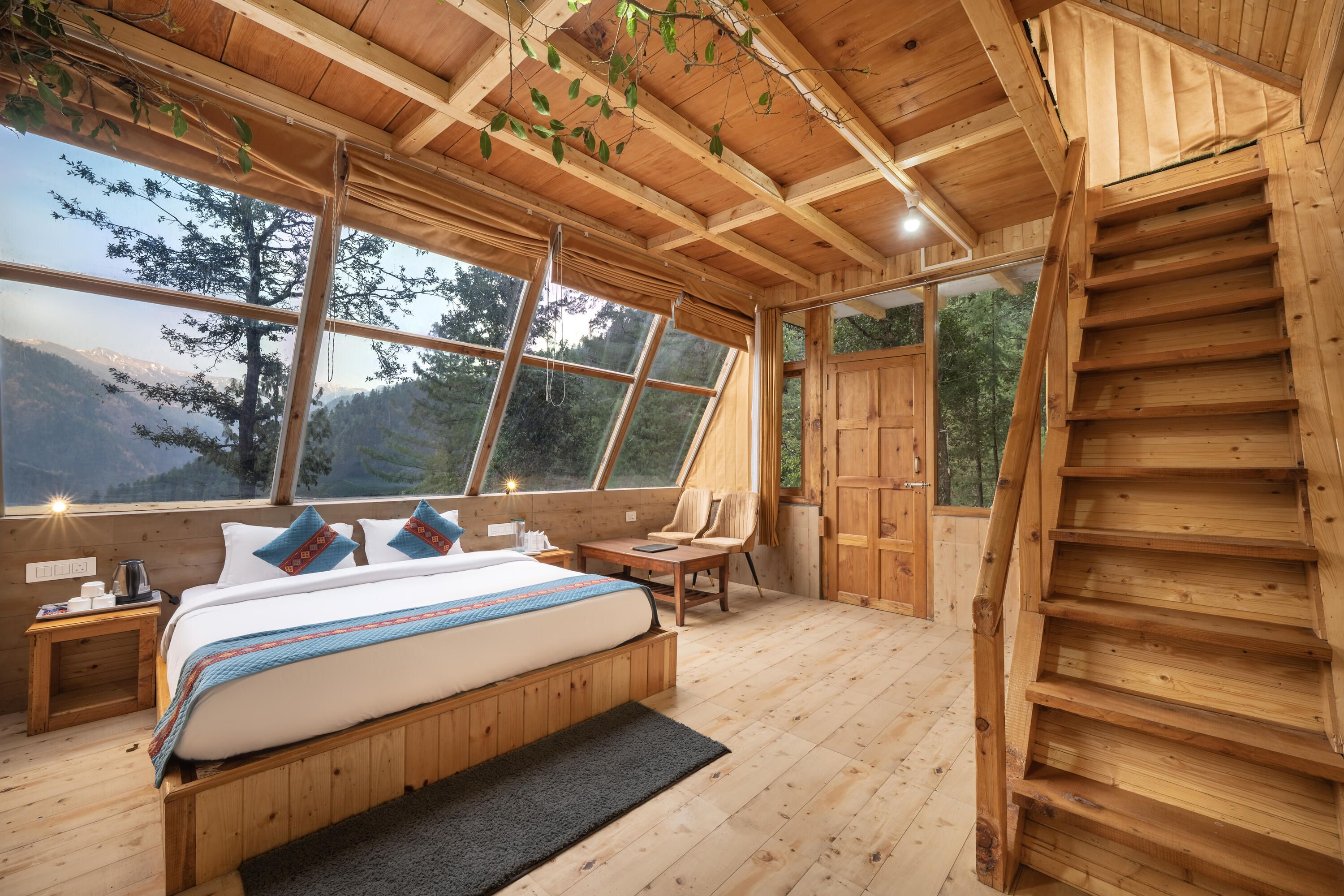 Cozy cedarwood interiors naturally retain warmth during freezing Himalayan nights, complemented by plush winter bedding and ambient lighting.
5. Hike to Bahu Village and the Sacred Balu Nag Temple
Perched higher up the valley amidst a dense deodar sanctuary, Bahu village offers an authentic glimpse of peaceful Himachali rural life. The pagoda-style Balu Nag Temple and its tranquil village pond take on a storybook atmosphere in winter, with woodsmoke curling gently from slate-roofed village cottages.
6. Savor Warm Himachali Siddu by a Crackling Fireplace
Nothing warms the soul after a snow trek quite like authentic local cuisine. Dig into fresh steamed Siddu—a traditional leavened Himachali bread stuffed with ground walnuts, poppy seeds, and local spices, drenched generously in pure desi ghee. Pair it with fresh river trout and hot ginger-honey-lemon tea beside an evening fire pit.
Where to Stay: Echor Jibhi Treehouse Retreat (Tandi)
When selecting winter accommodation in Jibhi, heating, hot water reliability, and elevation are paramount. While budget valley homestays often struggle with freezing pipes and damp rooms, Echor Jibhi Treehouse Retreat is intentionally crafted for serene, comfortable winter escapes.
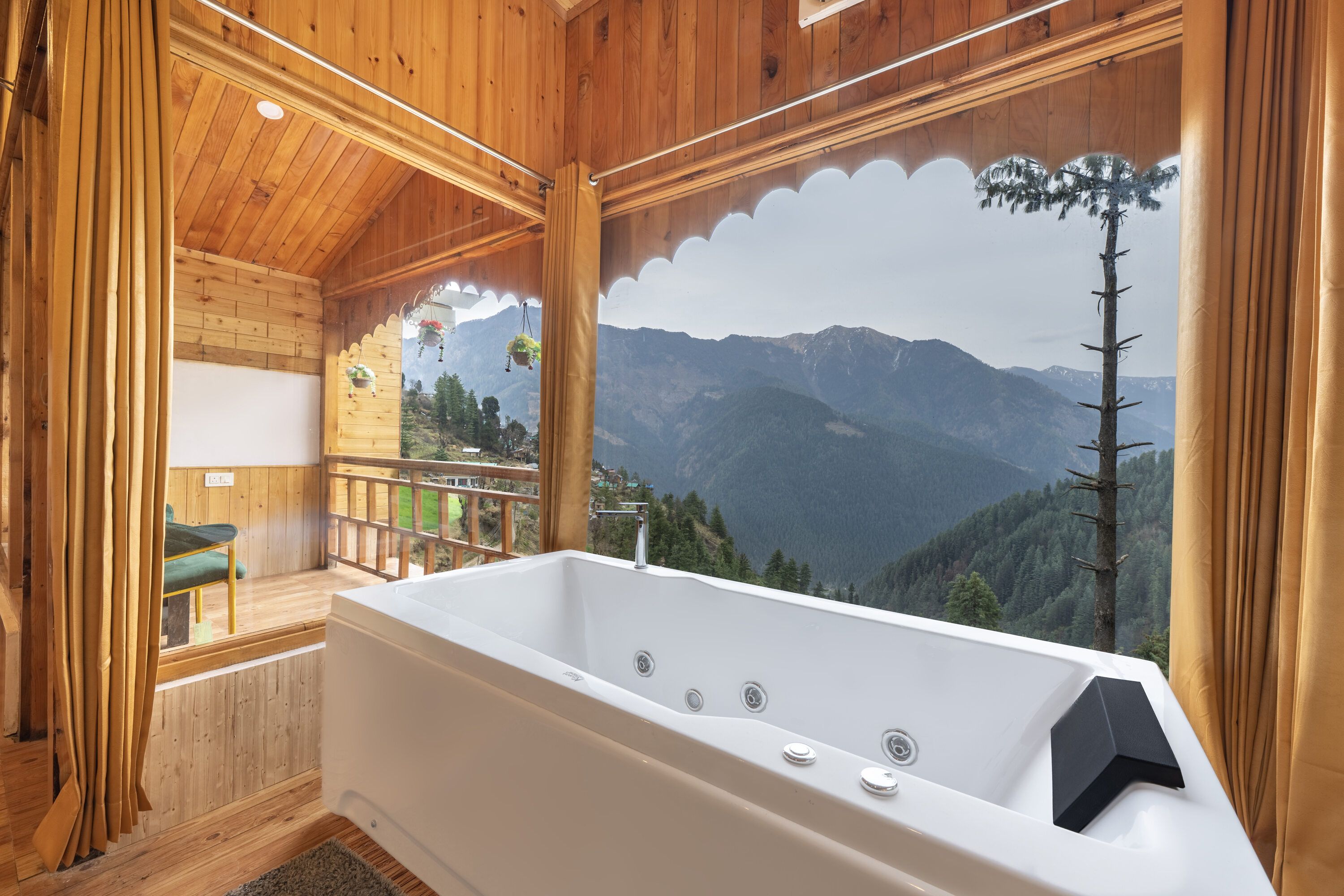 The signature Skyline Jacuzzi Suite at Echor Jibhi Treehouse Retreat: soaking in hot mountain water with panoramic valley views.
- Elevated Tandi Ridge Location: Located at 2,200 meters, Tandi receives significantly more consistent winter snow and unobstructed mountain panoramas than the shaded valley bottom.
- Skyline Tree Cottages with Jacuzzi: Experience the ultimate mountain indulgence—relax in a private, heated jacuzzi overlooking snow-draped pine valleys after an exhilarating winter hike.
- Cozy Cedarwood Interiors: Handcrafted from natural seasoned timber, every cottage naturally retains warmth, complemented by high-grade winter duvets and room heating facilities.
- Authentic Gourmet Dining: Enjoy piping hot meals, regional delicacies, and warm evening beverages prepared with fresh local ingredients by the in-house culinary team.
If you're pairing your Jibhi journey with a broader Himachal winter itinerary, you can easily connect your trip with our boutique sister retreats at Echor Luxe Manali or plan an unforgettable overland journey with our guide to the Manali to Spiti Valley Tour.
Trust & Authority Signals
Industry Insight: Over the last two winter seasons, regional travel trends across Himachal Pradesh show a 40%+ shift away from congested commercial hubs like Manali and Shimla toward tranquil, nature-first valleys like Tirthan and Jibhi. Discerning travelers are actively prioritizing authentic wooden craftsmanship, unpolluted pine air, and verified heating infrastructure over commercial mall roads.
Original Local Insight (The #1 Winter Planning Mistake in Jibhi): The most frequent misstep first-time travelers make when booking Jibhi in winter is staying in the shaded, narrow valley floor. The main Jibhi market sits at 1,600m in a deep gorge that loses direct sunlight by 2:30 PM, making winter nights damp and bitterly cold. In contrast, staying on the elevated southern-facing ridge of Tandi (2,200m), where Echor Jibhi Treehouse Retreat is located, guarantees maximum winter sun exposure through 5:00 PM and significantly higher chances of pristine snowfall.
Conclusion
A winter escape to Jibhi works because the logistics are effortless: an overnight luxury Volvo from Delhi or Chandigarh drops you at Aut Tunnel by 7:00 AM, and an easy 1-hour scenic cab ride brings you directly to pine-scented tranquility. A 3-day itinerary gives you ample time to explore frozen waterfalls, hike to ancient Kath-Kuni fortresses, and experience the snowfields of Jalori Pass without ever feeling rushed.
For couples, families, and creative professionals seeking an unhurried mountain holiday with private heated jacuzzi comforts and snow-capped pine views, reserve your dates early at Echor Jibhi Treehouse Retreat in Tandi.
Now it's your turn — pick your travel dates, pack your sturdy winter thermals, and get ready for a magical Himalayan winter. Have questions about road conditions from Aut or snowfall timing for your dates? Drop your questions in the comments below, and our local team will help you fine-tune your itinerary!
How to Reach Jibhi in Winter: Practical Route Guide
Jibhi is among the most accessible offbeat Himalayan destinations from Delhi and Chandigarh, even during mid-winter months:
- By Road (Delhi / Chandigarh): Follow NH 44 and NH 21 past Chandigarh, Bilaspur, Sundernagar, and Mandi. After exiting the landmark Aut Tunnel, take the right fork along the Tirthan River toward Banjar and Jibhi (approx. 27 km from Aut). The drive from Delhi takes about 11–13 hours.
- By Overnight Volvo Bus: Board any Delhi-to-Manali luxury Volvo bus and get off at the Aut Tunnel exit early in the morning. Pre-booked local taxis from Aut reach Jibhi in approximately 1 hour.
- By Air: The nearest airport is Bhuntar (Kullu), located about 60 km from Jibhi (a scenic 2-hour taxi ride).
Essential Winter Packing Checklist for Jibhi
Don't Travel to Jibhi Without These Winter Essentials:
- Layered Thermals: Merino wool or synthetic base layers to trap body warmth during freezing nights.
- Windproof & Waterproof Jacket: Heavy down jacket with a water-resistant outer shell for snow flurries.
- Trekking Boots with Deep Rubber Lugs: Standard sneakers will slip dangerously on morning black ice; waterproof boots are mandatory.
- Heavy Woolen Socks & Gloves: Fleece-lined waterproof gloves and thermal socks keep extremities comfortable.
- High-Capacity Power Bank: Smartphone batteries drain rapidly in sub-zero temperatures.
- Cash in Hand: ATMs in Banjar and Jibhi occasionally run out of cash during severe winter power cuts.
Frequently Asked Questions About Jibhi in Winter
Does it snow in Jibhi in December?
Yes, Jibhi experiences snow flurries starting around mid-December, particularly during western disturbances. While the lower valley village may receive lighter dusting, higher ridge areas like Tandi (home to Echor Treehouse Retreat) and Jalori Pass receive steady snow layers from late December onwards.
Is Jalori Pass open during winter?
Jalori Pass generally remains open through November and early December. However, after heavy snowfall in January and February, the pass frequently closes to civilian vehicle traffic due to thick snow and black ice. Local 4x4 vehicles can often take travelers up to the snowline near Shojha even when the pass itself is officially closed.
Is Jibhi safe to visit for couples and families in winter?
Jibhi is one of the safest and most welcoming hill hamlets in Himachal Pradesh. The main highway from Aut to Jibhi is well-maintained and remains accessible throughout the winter season. Travelers should exercise basic winter precautions, avoid driving on unfamiliar roads after dark, and stay in reputable properties equipped with reliable heating and hot water.
Which is better for a winter vacation: Jibhi or Manali?
Manali is ideal if you want bustling commercial markets, vibrant cafes, and snow sports at Solang Valley. Jibhi is vastly superior if you prefer serene wooden cottage living, untouched nature trails, quiet evenings by a bonfire, and zero traffic congestion. Many travelers combine both by spending 2 nights in Jibhi followed by 2 nights in Manali.
Frequently Asked Questions
Get in Touch
Still have questions? Fill out the form below and our team will get back to you shortly.