
Spiti Mud Huts: Staying in Kaza and Tabo
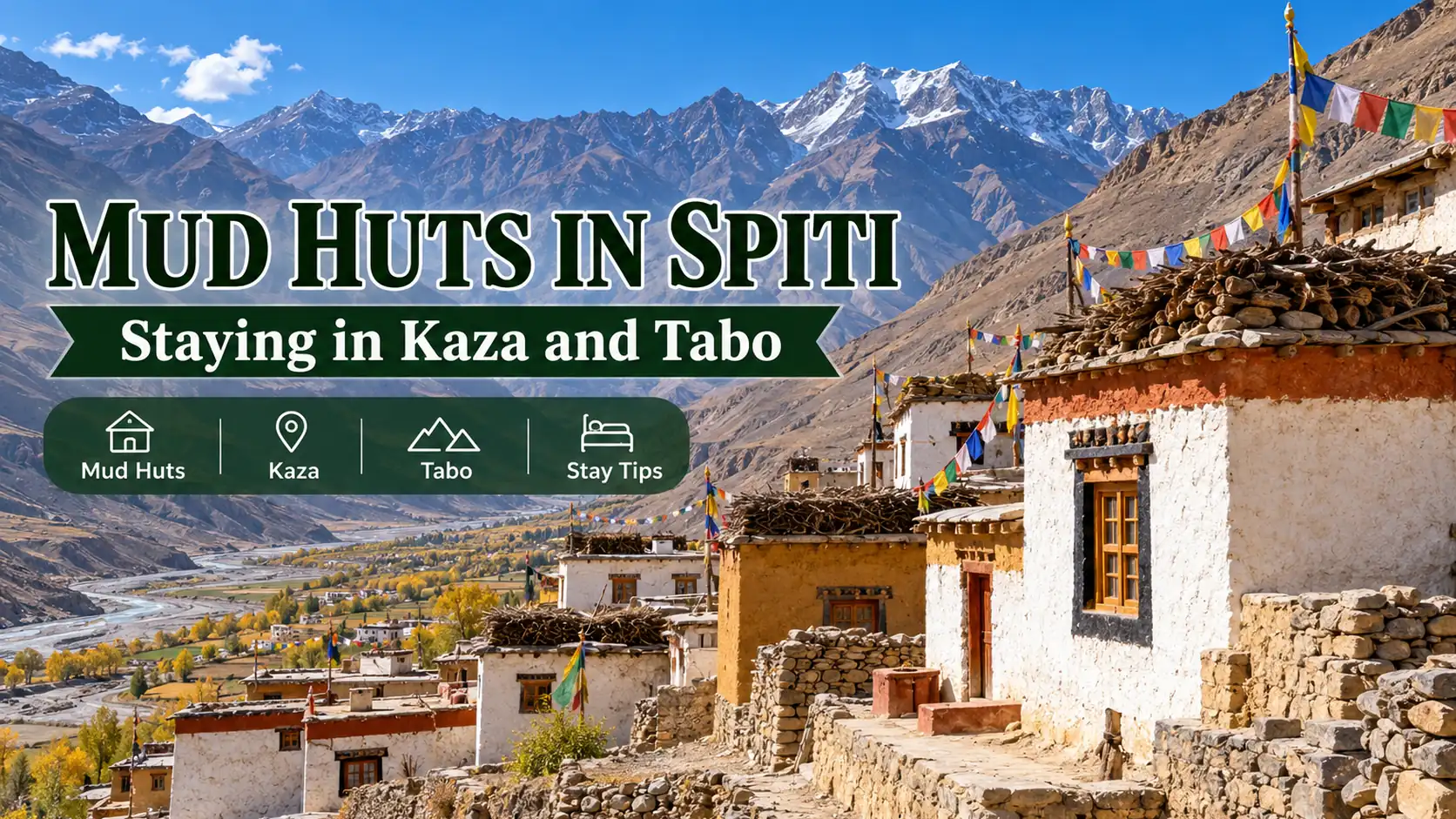
How mud huts in Kaza and Tabo keep you warm in a cold desert, how to pick a room, and the altitude and road facts to plan around.
Verified Author
Most people plan Spiti around the drive and treat the bed as an afterthought. Then they reach Kaza after a long day on the road, feel the thin air, and realise the room matters more than the itinerary. A cold concrete box with a weak heater makes the first night hard. Picking one of the Spiti mud huts is a different choice, because earthen walls are built for exactly this climate. Daytime sun is sharp, nights drop fast, and the walls hold warmth between the two. This guide covers why that works, what the huts at Echor Kaza and Echor Tabo actually offer, and how to choose between them. It also covers the parts that catch travellers out: altitude, which road is open in which month, and the order in which to visit Tabo, Kaza and the monasteries around them.
Key Takeaways
- Earth suits Spiti: Thick mud walls slow down heat loss, which matters in a cold desert with big swings between day and night.
- Kaza is all huts: Echor Kaza describes 12 mud huts with private decks, a restaurant and a garden area near Key Monastery.
- Tabo mixes room types: Echor Tabo has 19 rooms, and its mud huts with a private deck sit alongside standard, deluxe, premium and family rooms.
- Altitude is real: Kaza sits at about 3,800 m and Tabo a little over 3,000 m, so sleeping lower first helps.
- Route depends on season: The Shimla and Kinnaur road is the year-round option, while the Manali road over Kunzum Pass closes in winter.
- Tabo Monastery is a short walk: Echor Tabo says it is about 200 metres from the monastery founded in 996 CE.
- Kalpa makes a good first stop: A night at Echor Kalpa breaks the climb on the Kinnaur side.
Why Spiti Mud Huts Suit a Cold Desert
Spiti is a high cold desert with very little rain and scarce timber. Mud was the material people had, so villages around Kaza grew out of rammed earth on stone footings.
Thick walls and slow heat
Traditional Spitian walls are often 45 to 60 cm thick. That mass soaks up afternoon sun and releases it slowly after dark, so the room stays steadier through the night.
Flat roofs and small windows
Flat mud roofs work because there is so little rain to shed. Village houses keep openings small and face the sun where they can. Modern Spiti mud huts follow the same logic: compact rooms and thick walls.
Echor Kaza: Spiti Mud Huts Near Key Monastery
Echor Mud Huts Kaza sits on the Kaza Chandratal Road at Rangrik. The property page places it near Key Monastery and the village of Kibber. It describes 12 mud huts that follow local Spitian architecture, each with a private deck facing the mountains.
The two hut types
Both listings use a king bed for two adults plus one extra guest.
- Mud Huts: 250 sq ft, built with local materials, with a mountain view.
- Mud Huts with Private Deck (Valley View): 270 sq ft, the slightly larger option.
Each hut lists a private bathroom, wardrobe, work desk and a tea and coffee maker. If you want a mud house in Kaza, this is the match.
What sits around the huts
Amenities include parking, a restaurant, a garden area, room service, a bonfire area, a 24-hour front desk and free Wi-Fi. The property FAQ mentions heated rooms and hot water.
Echor Tabo: Mud Huts Tabo and Four Other Room Types
Echor Mud Huts Tabo is in Tabo village, near the helipad, with the Spiti River close by. The page says it is about 200 metres from Tabo Monastery. It lists 19 rooms across five types.
Mud huts with a private deck
The Mud Huts with Private Deck (Mountain View) are the units Echor describes as made from locally sourced mud. Each is 300 sq ft with a king bed, room for two plus one, and a mountain-facing deck. Ask for this type by name if earth walls are your reason for booking.
The other rooms
- Standard Room (Village View): 200 sq ft, king bed.
- Deluxe Room (Valley View): 200 sq ft, king bed.
- Premium Room with Balcony (Mountain View): 200 sq ft, king bed and balcony.
- Family Room (Garden View): 300 sq ft, king plus single, up to three plus one.
Tabo shares the Kaza amenity list, and its room pages mention heating and hot water.
Kaza or Tabo: Where to Stay in Spiti Valley
Kaza and Tabo are roughly 50 km apart, and many trips use both.
A side-by-side view
| Echor Kaza | Echor Tabo | |
|---|---|---|
| Altitude | About 3,800 m | A little over 3,000 m. |
| Rooms | 12 mud huts with decks | 19 rooms, some of them mud huts. |
| Nearby | Key Monastery, Kibber | Tabo Monastery and caves. |
| Best for | Couples who want only huts | Families and a first night in Spiti. |
Using both
Coming from Kinnaur, Tabo is the natural first night because it sits lower. Then move up to Kaza as your base for Key and Kibber.
How to Choose Spiti Mud Huts for Your Trip
Heating and hot water
Both properties mention heated rooms and hot water. Spiti nights can be cold even in summer, so confirm both for your dates.
Season and group size
Summer to early autumn is when both roads are most likely open. A couple fits any hut, while a family of four will find the Tabo family room easier.
What a night in Spiti mud huts feels like
It is quiet. Earth walls absorb sound as well as heat, and the deck becomes your evening spot once the sky clears. Expect a rustic finish, not a city hotel.
Altitude: Give Your Body Time in Spiti
Kaza at about 3,800 m is higher than most travellers have ever slept. Mountain medicine guidance advises against a direct jump above 3,000 m.
Sleep lower first
Above 3,000 m, a common rule is to raise your sleeping height by only a few hundred metres per night. Spiti roads do not allow perfect steps, but Kalpa, then Tabo, then Kaza is a sensible order.
Signs to watch
Headache, poor sleep, nausea and unusual tiredness are the early signs. Rest a day if they are mild and go lower if they get worse.
When Spiti Is Reachable
The Shimla and Kinnaur route
This road climbs from Shimla through Kinnaur and reaches Tabo before Kaza. It stays open for most of the year, though snow can shut sections for a few days. You could break the early climb at Echor Narkanda above Shimla.
The Manali route over Kunzum Pass
From Manali the road crosses Kunzum Pass at roughly 4,550 m. It usually opens around June or July and closes with the first heavy snow, often by November. Starting this way, rest a night at Echor Aurum in Manali first. Many travellers loop in one road and out the other.
Tabo Monastery, Key Monastery and Kalpa on the Way In
Tabo Monastery
Tabo Monastery was founded in 996 CE and is often called the Ajanta of the Himalayas for its murals. From Echor Tabo it is a short walk.
Key Monastery
Key Monastery stands above the valley floor, roughly 12 to 15 km from Kaza, at a little over 4,100 m. It is the largest monastery in Spiti, and pairs well with Kibber.
Kalpa as the stop before Spiti
Echor Kalpa sits at about 9,700 feet facing the Kinnaur Kailash range. It suits the night before Tabo on the Shimla side. Read more about the quieter corners near Kalpa, or compare autumn trips in our October travel guide.
Quick Checklist
- Pick your road by month: Kinnaur most of the year, Manali only when Kunzum Pass is open.
- Plan Kalpa, then Tabo, then Kaza if you are coming from Shimla.
- Ask for the mud huts with private deck by name at Tabo.
- Confirm heating and hot water for your dates.
- Keep your first afternoon in Spiti slow and rest.
- Leave a buffer day in case snow or landslides close a road.
- Browse all Echor hotels to build the rest of the route.
Planning a Spiti loop and want the right hut for each night? Write to the Echor reservations team with your dates and route.
Frequently Asked Questions
Get in Touch
Still have questions? Fill out the form below and our team will get back to you shortly.